
Quick Summary
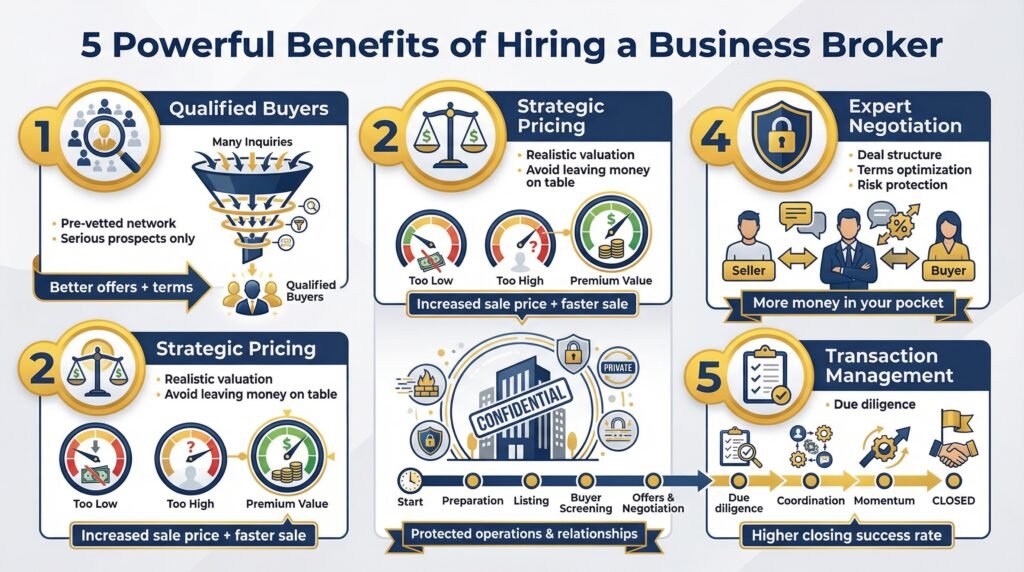
Hiring a business broker gives you access to qualified buyers, a smarter pricing strategy, confidential marketing, expert negotiation, and full transaction support—ultimately helping you sell faster.
A good business broker isn’t just a cost, it’s a value multiplier that typically delivers a higher sale price, better terms, lower risk, and far less stress. Preparation still matters, but once your business is ready, working with an experienced broker dramatically improves your outcome.
Introduction
Selling a business is one of the most complex and high-stakes financial decisions an owner will ever make. While some owners attempt to handle the process themselves, many discover too late that doing so can cost them time, money, and missed opportunities.
A skilled business broker does far more than “list your business”—they act as your advisor, deal strategist, and gatekeeper throughout the entire process.
Here are five powerful benefits of hiring a business broker—and why they can dramatically impact your outcome:
1. Access to Qualified Buyers (Not Just Inquiries)
One of the biggest misconceptions among business owners is that finding a buyer is the hardest part. In reality, finding the right buyer is what matters most.
A professional broker brings:
- A network of pre-vetted, financially capable buyers
- Relationships with private investors, strategic acquirers, and funds
- Access to proprietary buyer databases and deal platforms
Instead of wasting time with unqualified inquiries, tire-kickers, or competitors fishing for information, a broker ensures you are only engaging with serious, vetted prospects.
Why this matters:
More qualified buyers = stronger competition = better offers and terms.
2. Strategic Pricing That Maximizes Value
Pricing a business isn’t guesswork—it’s a blend of financial analysis, market positioning, and buyer psychology.
A skilled broker helps you:
- Determine a realistic and defensible valuation
- Avoid underpricing (leaving money on the table)
- Avoid overpricing (which can stall your deal entirely)
- Position your business based on growth potential, not just historical performance
They understand what buyers in your market are actually paying—and how to present your business in a way that commands premium value.
Why this matters:
The right pricing strategy can increase your final sale price and shorten your time on market.
3. Confidential Marketing That Protects Your Business
Confidentiality is critical when selling a business. If employees, customers, or competitors learn about the sale too early, it can create instability and risk.
A broker implements a controlled, confidential process that includes:
- Anonymous listings that protect your identity
- Non-Disclosure Agreements (NDAs) before sharing details
- Screening buyers before releasing sensitive information
- Carefully timed communication to stakeholders
Why this matters:
You can explore a sale without disrupting operations, morale, or customer trust.
4. Expert Negotiation That Protects Your Interests
Many deals fall apart—or become unfavorable—not because of price, but because of poor deal structure.
A broker brings negotiation expertise across:
- Purchase price vs. deal terms
- Earnouts, seller financing, and contingencies
- Working capital adjustments
- Risk allocation between buyer and seller
They act as a buffer between you and the buyer, keeping negotiations objective and strategic rather than emotional.
Why this matters:
The structure of your deal can significantly impact how much money you actually take home—and how much risk you retain after closing.
5. End-to-End Transaction Management
Selling a business involves dozens of moving parts, especially during due diligence and closing.
A broker helps manage:
- Buyer communications and timelines
- Document requests and data room organization
- Coordination with attorneys, CPAs, and lenders
- Issue resolution during due diligence
- Keeping momentum through to closing
Without experienced guidance, deals often stall, drag out, or collapse under the weight of complexity.
Why this matters:
A broker keeps the deal on track, reduces stress, and dramatically improves your chances of successfully closing.
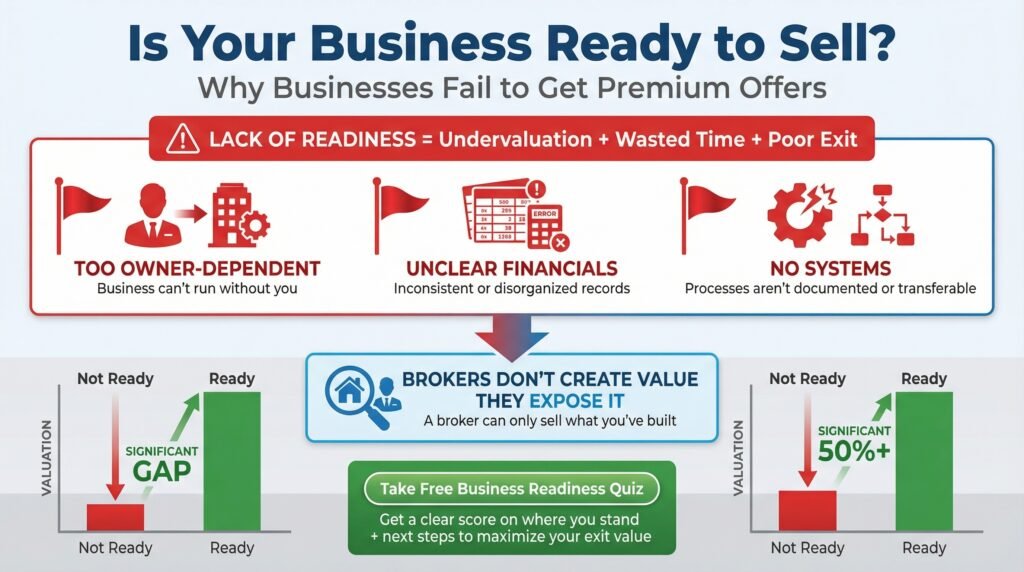
Pre-Broker Preparation: Is Your Business Ready
A major contributor to business undervaluations, wasted time, and poor exits is simply a lack of readiness. A broker can only sell what you’ve built.
If your business:
- Depends heavily on you
- Has inconsistent or unclear financials
- Lacks systems or transferable processes
Then even the best broker will struggle to get a premium offer.
Brokers don’t create value. They expose it.
Bottom line: If you are not sure what basic preparation is required before considering a business valuation or selecting a business broker, click the button below to take our free business readiness quiz. The score will give you a clear indication of where you are in the process and the next course of action to take to ensure you start the business sale and exit on the right footing.
Final Thoughts: A Broker Isn’t a Cost—They’re a Value Multiplier
Many owners hesitate to hire a broker because of fees. But in most cases, the right broker:
- Increases your sale price
- Improves deal terms
- Reduces risk
- Saves time
- Maximizes the likelihood of closing
In other words, they don’t just help you sell your business—they help you sell it right.
If you have done the requisite amount of preparation as mentioned, read our review of Earned Exits here and learn why they were voted a top business broker in 2025. If you feel they are right for your business sale, click the button below to visit the Earned Exits business brokers’ official site to receive your free business valuation.

*Disclaimer: This article is written for educational purposes and should not be interpreted as financial advice.
*Disclaimer: This article is written for educational purposes and should not be interpreted as financial advice. We may receive compensation for referrals made through this article.