
Quick Summary
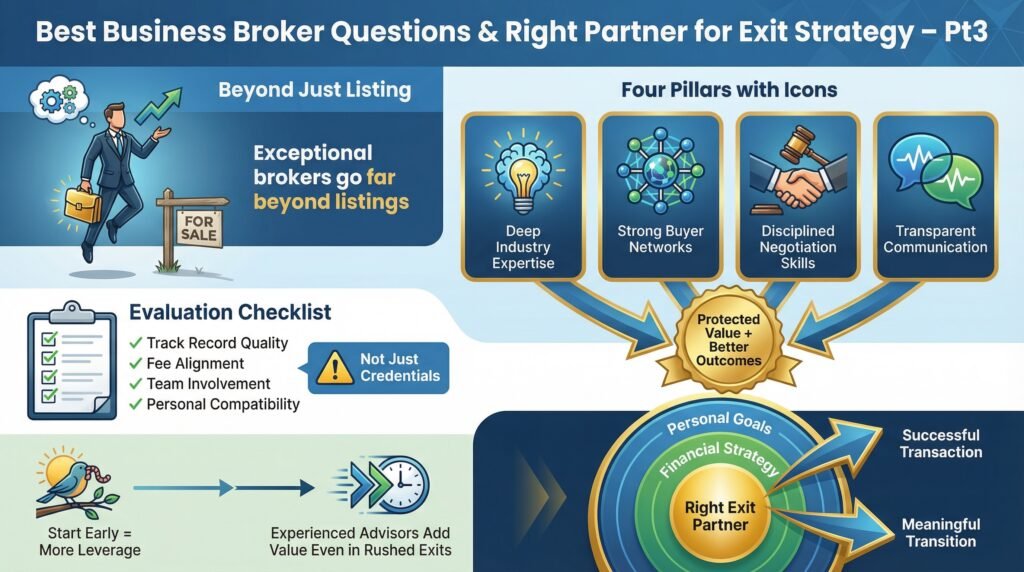
Exceptional business brokers go far beyond listing a company for sale. The best exit partners combine deep industry expertise, strong buyer networks, disciplined negotiation skills, and transparent communication to protect value and drive better outcomes.
Choosing the right broker requires evaluating track record quality, fee alignment, team involvement, and personal compatibility, not just credentials. Starting the search early creates leverage, but experienced advisors can still add significant value even in accelerated or unexpected exits. The right exit partner aligns financial strategy with personal goals, ensuring both a successful transaction and a meaningful transition.
In parts 1 and 2 of this Q&A series, we covered the 10 critical questions to ask before hiring a business broker. In this final part, we will discuss how to implement this knowledge to identify what makes an exceptional business broker and push past the ‘analysis paralysis’.
What Makes an Exceptional Business Broker?
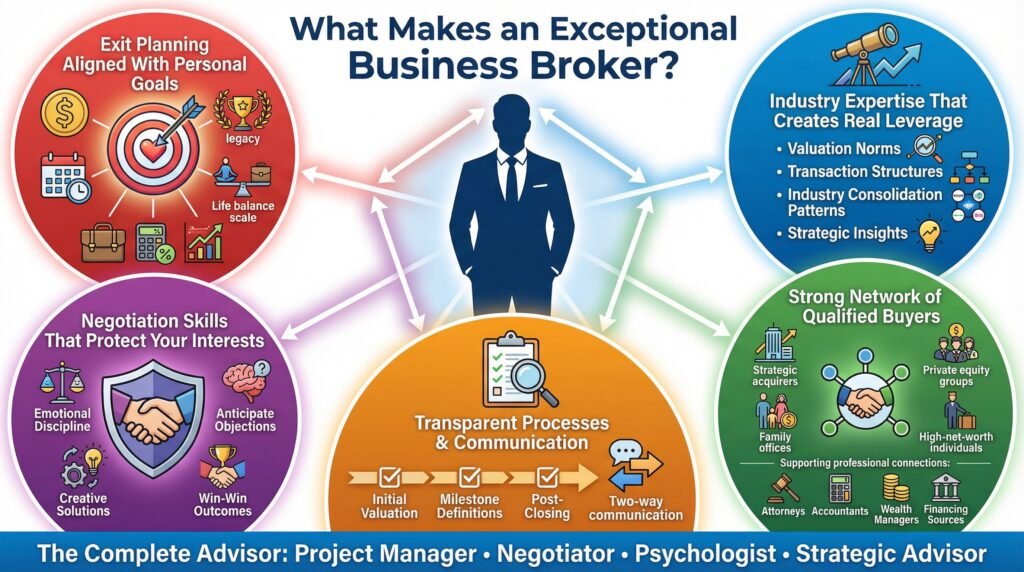
The best exit partners combine technical competence with interpersonal skills that sustain momentum through inevitable challenges. They function as project managers, negotiators, psychologists, and strategic advisors, often simultaneously. While credentials and experience create necessary foundations, certain distinguishing characteristics separate truly exceptional brokers from merely adequate ones.
Industry expertise that creates real leverage
Deep industry knowledge transforms general brokerage capabilities into strategic advantages during critical negotiation phases. Elite brokers maintain a comprehensive understanding of valuation norms, buyer motivations, and transaction structures specific to your business category. This expertise allows them to position your company’s strengths against industry benchmarks while contextualizing perceived weaknesses within sector expectations.
The most valuable expertise extends beyond transaction mechanics to include strategic insights about industry consolidation patterns, emerging disruptors, and evolving business models within your sector. This forward-looking perspective helps identify buyer categories willing to pay premium valuations based on strategic synergies or growth opportunities particular to your business positioning.
Strong network of qualified buyers
Superior brokers maintain extensive relationships with active buyers across multiple categories, including strategic acquirers, private equity groups, family offices, and high-net-worth individuals seeking acquisition opportunities. These relationships develop through years of successful transactions and consistent market presence, creating privileged access that generates qualified inquiries when your business enters the market.
The most connected advisors leverage these relationships to create competitive dynamics that enhance your negotiating position. Their networks include not only potential buyers but also complementary advisors: attorneys, accountants, wealth managers, and financing sources who facilitate smooth transactions. This ecosystem of relationships proves particularly valuable when addressing specialized challenges or navigating complex deal structures.
Transparent processes and communication
Process clarity creates confidence during uncertain transitions. Exceptional brokers establish clear expectations about each phase of your exit journey, from initial valuation through post-closing transitions. They provide detailed timelines, milestone definitions, and responsibility assignments that eliminate ambiguity about how your transaction will progress. This transparency extends to potential obstacles, with forthright discussion of challenges that typically arise during similar transactions.
Regular communication rhythms reinforce this transparency, with scheduled updates supplemented by immediate notifications about significant developments. The best advisors strike an optimal balance, providing sufficient detail without overwhelming you with tactical minutiae. Their communication style adapts to your preferences while ensuring you maintain appropriate oversight throughout the process.
Negotiation skills that protect your interests
Negotiation expertise represents the most visible value creation opportunity during your exit process. Skilled brokers maintain emotional discipline when advocating for your priorities, preventing personal reactions from compromising strategic positions. They anticipate buyer objections, prepare compelling counterarguments, and structure creative solutions that overcome apparent impasses.
The most effective negotiators focus on interests rather than positions, finding mutually beneficial arrangements that satisfy both parties’ core requirements. They recognize that successful transactions require addressing legitimate buyer concerns while protecting your fundamental priorities. This balanced approach maximizes the probability of closing while preserving your leverage on critical terms.
Exit planning that aligns with your personal goals
Truly exceptional brokers recognize that successful exits transcend financial outcomes, incorporating your personal aspirations and post-exit plans. They initiate substantive conversations about what constitutes “success” beyond transaction price, including timing considerations, potential ongoing roles, legacy preservation, and wealth management objectives. This holistic perspective shapes their strategic recommendations throughout your exit journey.
The most valuable advisors coordinate effectively with your other professional relationships, including attorneys, accountants, and financial planners. They help you anticipate post-transaction considerations like wealth transfer strategies, investment alternatives, and lifestyle adjustments. This comprehensive approach ensures your exit achieves both financial optimization and personal fulfillment.
How to Compare Different Exit Strategy Partners
Systematic comparison of potential exit partners requires evaluating both quantitative credentials and qualitative factors. Develop a structured assessment framework that weighs considerations most relevant to your specific situation. While transaction experience creates a necessary foundation, compatibility factors often determine relationship success during stressful phases of your exit journey.
Track record analysis: beyond the success rate
Effective track record evaluation examines nuanced performance metrics beyond basic closing percentages. Request detailed information about recent transactions, including initial listing prices versus final sales prices, average time-to-close statistics, and retention of earn-out payments when applicable. The most revealing analyses examine transactions comparable to yours in terms of industry, size, and complexity.
Supplement performance statistics with qualitative assessments from previous clients. References provide invaluable perspectives about how brokers handled unexpected challenges, maintained momentum during difficult phases, and demonstrated creativity when conventional approaches proved inadequate. These testimonials often reveal character qualities and problem-solving capabilities that determine success during inevitable complications.
Fee structures and value alignment
Fee arrangements reveal much about a broker’s confidence and client alignment. The most transparent structures create shared incentives that motivate maximum performance throughout your engagement. While most quality brokers utilize success-based compensation with tiered percentages based on transaction size, examine the subtleties that distinguish various approaches. Consider how minimum fees, retainer arrangements, and expense reimbursement policies might influence broker behavior during different transaction phases.
Equally important are termination provisions and post-engagement protections. Quality agreements balance reasonable commitment periods with clear exit paths if circumstances change. They provide detailed descriptions of services included within standard fees versus additional charges for specialized assistance. These provisions reflect professional respect for client autonomy while protecting legitimate broker interests when they’ve invested substantial resources in your transaction.
Team composition and who you’ll actually work with
The specific individuals managing your transaction often matter more than the brokerage firm’s overall reputation. Clarify exactly who handles each aspect of your sale process, including initial strategy development, marketing execution, buyer communications, negotiation management, and due diligence coordination. The most effective arrangements combine senior-level oversight with specialized expertise for technical components, creating both relationship continuity and functional excellence.
The Right Exit Partner Timeline: When to Start Looking
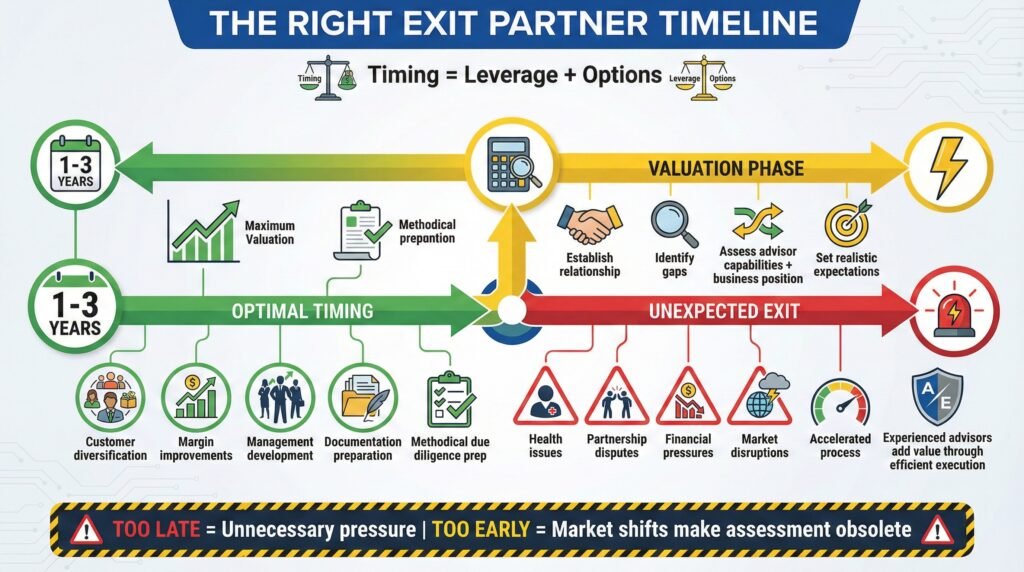
Timing significantly impacts both your selection options and leverage when engaging exit partners. Beginning your search too late creates unnecessary pressure that may compromise your evaluation process, while starting too early risks market shifts that render initial assessments obsolete. Consider how different circumstances affect optimal timing for initiating broker relationships.
1-3 years before intended sale
Engaging exit advisors well before your intended sale creates maximum optimization opportunities. This extended timeline allows implementation of strategic enhancements that increase valuation multiples, including customer diversification initiatives, margin improvement projects, management team development, and documentation of proprietary advantages. Early involvement also enables methodical preparation of financial information, operational documentation, and legal records that streamline future due diligence processes.
During business valuation phase
Many owners initiate broker relationships during preliminary valuation assessments, using this process to evaluate both the advisor’s capabilities and their business’s market position. This approach provides concrete value while establishing the relationship foundation necessary for effective exit planning. Quality brokers demonstrate their expertise through comprehensive valuation methodologies that identify specific enhancement opportunities.
The valuation process often reveals preparedness gaps that require attention before formal marketing begins. Working with advisors during this phase allows coordinated development of improvement strategies while establishing realistic value expectations. This collaborative approach creates shared understanding about both current value and enhancement potential before committing to full engagement.
After unexpected circumstances force a quick exit
Unplanned exit triggers, including health issues, partnership disputes, financial pressures, or market disruptions, necessitate accelerated broker selection processes. While compressed timelines limit optimization opportunities, experienced advisors still create substantial value through efficient execution, buyer access, and negotiation management. The most responsive brokers quickly assess your situation, prioritize critical preparation tasks, and implement streamlined marketing approaches appropriate for urgent circumstances.
Your Next Steps: Finding Your Ideal Exit Partner
Identifying your optimal exit partner begins with honest self-assessment about your business characteristics and personal priorities. Consider your industry complexity, transaction size, desired timeline, and specific requirements regarding confidentiality, post-sale involvement, and legacy preservation. These factors determine which broker capabilities matter most for your particular situation.
Develop a structured interview process that evaluates potential partners against consistent criteria. Schedule substantive conversations with multiple candidates, allowing sufficient time for detailed discussion of their approach, experience, and strategic recommendations for your specific circumstances. Request sample marketing materials, client references, and detailed explanations of their process for businesses similar to yours.
Remember that successful broker relationships combine professional capabilities with personal compatibility. The exit journey involves intense collaboration during emotionally charged circumstances. Select partners whose communication style, problem-solving approach, and personal values align with yours.
The most productive relationships balance professional expertise with interpersonal rapport that sustains momentum through inevitable challenges. At Earned Exits, they specialize in creating meaningful transitions that honor your business legacy while maximizing your financial outcomes.
With over 30 years of combined experience guiding business transitions, Earned Exits has successfully facilitated more than 47 transactions across 17 different business sectors.
The firm’s track record demonstrates particular strength in manufacturing, professional services, distribution, and technology companies valued between $1 million and $50+ million. This specialized experience allows them to understand sector-specific value drivers and connect businesses with the most appropriate buyer profiles for each unique situation. Unlike generalist brokers, their sector-specific knowledge helps identify and articulate the true value propositions that motivate premium offers.
Click below to get started today with a free business valuation from Earned Exits by filling out their short form. See how their proven 10-step exit process helps owners achieve maximum value on their terms

Frequently Asked Questions
What truly separates an exceptional business broker from an average one?
Exceptional brokers combine technical expertise with emotional intelligence. They manage complex transactions while maintaining momentum, protecting leverage, and guiding owners through high-stress decisions with clarity and discipline.
Why is industry-specific expertise so important in an exit?
Industry knowledge creates leverage. Brokers who understand your sector’s valuation norms, buyer motivations, and consolidation trends can position your business strategically and attract buyers willing to pay premium multiples.
How does a broker’s buyer network affect sale outcomes?
A strong, active buyer network increases deal quality and competitive tension. Brokers with relationships across strategic buyers, private equity, family offices, and high-net-worth individuals can generate stronger offers and better terms.
What should transparent communication from a broker look like?
Top brokers set clear expectations, define timelines and milestones, explain obstacles upfront, and maintain consistent communication rhythms. You should always know where the deal stands and why decisions are being made.
How do great brokers handle negotiations differently?
Elite brokers stay emotionally detached, anticipate objections, and focus on interests rather than rigid positions. They structure creative solutions that satisfy buyers while protecting your non-negotiables.
Should my broker care about goals beyond sale price?
Yes. The best exit partners address timing, legacy, post-sale roles, and personal wealth objectives, not just headline valuation. A successful exit aligns financial outcomes with life goals.
What metrics matter most when evaluating a broker’s track record?
Look beyond close rates. Ask about pricing accuracy, time to close, earn-out realization, and experience with businesses similar to yours in size, industry, and complexity.
How should broker fee structures align with my interests?
Strong fee structures emphasize success-based compensation with transparent terms. Review retainers, minimum fees, expense policies, and termination clauses to ensure incentives remain aligned throughout the process.
Who will actually work on my transaction?
Clarify this upfront. Senior-level involvement should be consistent, supported by specialists where appropriate. The people executing the deal matter more than the firm’s brand name.
When is the best time to start looking for an exit partner?
Ideally 1–3 years before a sale to maximize value. However, engaging during valuation or even under unexpected exit pressure can still produce meaningful results with the right advisor.
Can brokers still add value in forced or accelerated exits?
Yes. Experienced brokers bring speed, buyer access, and negotiation discipline when timelines are compressed, often preventing costly mistakes under pressure.
How do I compare multiple exit partners effectively?
Use a structured evaluation process. Compare industry experience, strategy quality, communication style, team structure, fee alignment, and references, not just promises or personality.
Why does personal compatibility matter so much?
Exits are emotionally charged and complex. You’ll work closely with your broker during stressful moments. Trust, communication style, and shared values directly impact deal success.
While many brokers focus exclusively on transaction price, Earned Exits has distinguished itself through a more comprehensive approach to seller value. Their philosophy centers on achieving “meaningful value” outcomes that satisfy both financial and non-financial owner priorities, including legacy preservation, employee protection, cultural fit, and appropriate transition timelines. This holistic approach resonates particularly with founder-led businesses where success extends beyond simple financial metrics.
Click the link below to get started with Earned Exits’ free valuation by filling out their short form. Avoid the many pitfalls that many businesses experience when choosing the wrong business broker.

*Disclaimer: This article is written for educational purposes and should not be interpreted as financial advice.
*Disclaimer: This article is written for educational purposes and should not be interpreted as financial advice. We may receive compensation for referrals made through this article.