
Latest posts
-
Selling a Business Yourself vs Broker: Why Saving the 10% Fee Can Cost You More
Quick Summary The decision to sell your business yourself or hire a broker is one of the most consequential choices you’ll make, and getting it wrong costs real money. Most business owners approach this the wrong way. They start by asking, “How do I avoid the broker fee?” when the better question is, “What decision
-
Should You Hire a Business Broker? The $1M+ Decision Most Owners Get Wrong
Quick Summary Hiring a business broker makes sense when the deal is complex, high-value, or time-sensitive, but may not be necessary for small, simple, or relationship-based sales. The decision comes down to a tradeoff: higher price and smoother execution vs. paying fees and giving up some control. Bottom line:A broker is usually worth it when
-
Tech Startup Exit Valuation Services: Costs, Timelines & the 12-24 Month Prep Rule
Quick Summary The content promotes Earned Exits as a top-rated (recognized #1 in 2025 business brokerage rankings) seller-focused firm offering free initial valuations and a structured 10-point exit process for tech and other businesses. This structured pre-exit approach — starting with expert valuation — helps tech founders realistically maximize their company’s sale or acquisition value
-
Tech Startup Exit Valuation Services: How to Get 3–15x Revenue (What Buyers Really Look At)
Key Takeaways Determining your tech startup’s exit valuation isn’t just about crunching numbers—it’s about telling your company’s full value story. Most founders I’ve worked with are shocked to discover just how much their exit valuation can vary based on timing, preparation, and presentation of their financial narrative. The difference between a good exit and a
-
5 Benefits of Hiring a Business Broker That Can Add Thousands to Your Sale Price
Quick Summary Hiring a business broker gives you access to qualified buyers, a smarter pricing strategy, confidential marketing, expert negotiation, and full transaction support—ultimately helping you sell faster. A good business broker isn’t just a cost, it’s a value multiplier that typically delivers a higher sale price, better terms, lower risk, and far less stress.
-
What to Avoid When Selling an Established Business: 7 Mistakes That Cost Owners Millions
Key Takeaways Selling an established business is complex, and most owners leave significant money on the table due to poor timing, inadequate preparation, emotional decisions, or suboptimal deal structures. Key value drivers include proper financial documentation (which can boost sale price by 20-50%), smart structuring (cash vs. earn-outs, seller financing, tax optimization), avoiding due diligence
-
How to Close a Business Sale: Legal Steps, Asset Transfers and Post-Sale Transition Guide
Key Takeaways Successfully selling your business requires a structured, disciplined process—not just finding a buyer and agreeing on price. Close the DealClosing formalizes the transfer of ownership through coordinated legal, financial, and operational steps. Expect 2–4 weeks of document preparation and final verification after due diligence. Key components include: Preparation prevents last-minute surprises that can
-
How to Find the Right Business Broker to Sell Your Small Business (And What to Look For)
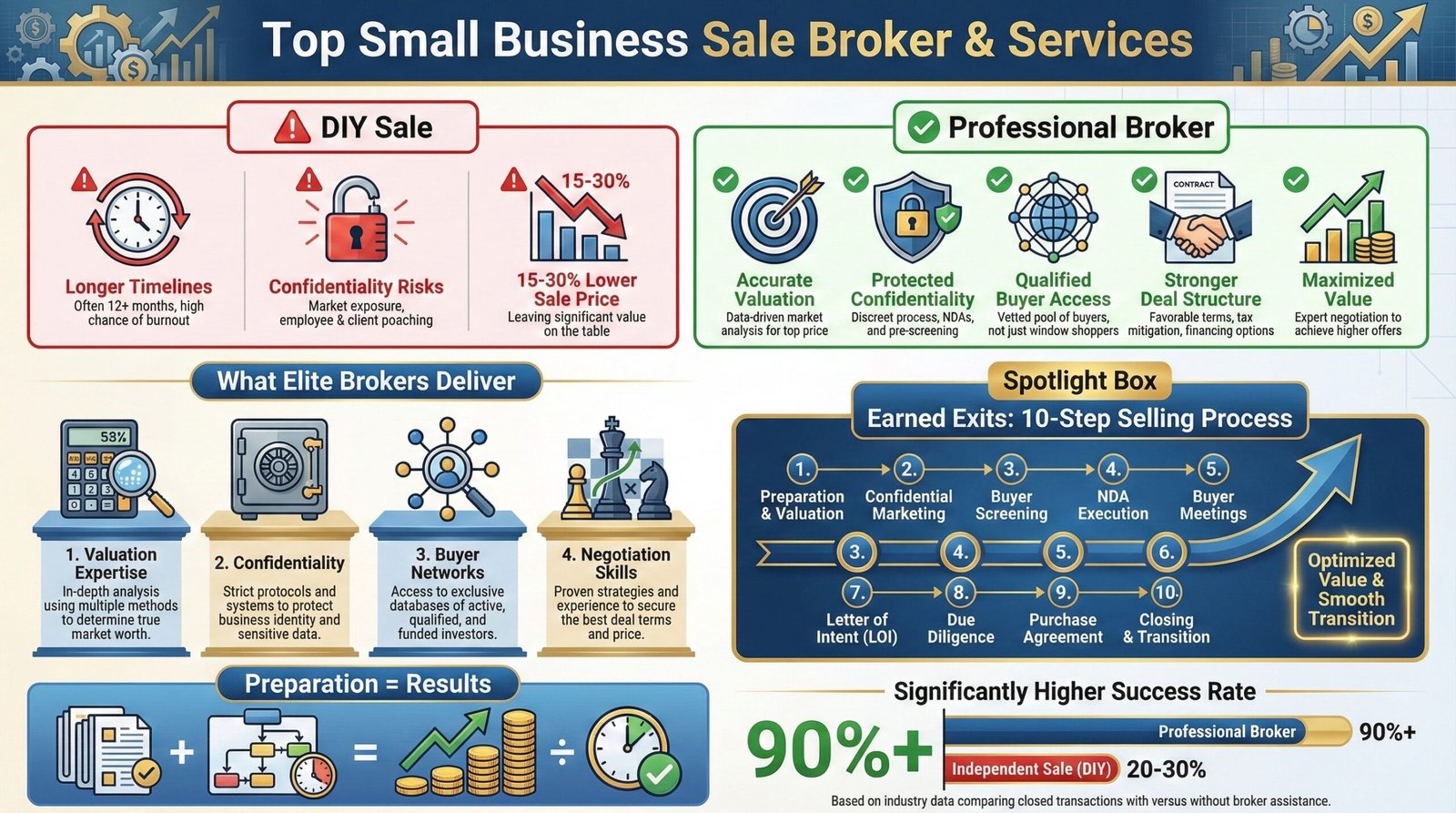
Key Takeaways Selling your small business without professional help often leads to longer timelines, confidentiality risks, and 15–30% lower sale prices. A skilled business broker improves valuation accuracy, protects confidentiality, accesses qualified buyer networks, structures stronger deals, and manages negotiations—maximizing value while allowing you to stay focused on running your business. In Part 1 of
-
How a Professional Business Valuation Can Increase Your Sale Price by 25–40%
Quick Summary: Business Valuation Timeline and Expectations Start exit planning and professional valuation 18-36 months (ideally 2-5 years) before your target sale date, this allows time for strategic value enhancements, financial cleanup, and market timing, often boosting sale price by 25-40% (or more). Most owners undervalue their business using DIY methods or online calculators, which
-
The Business Selling Checklist: Everything You Need to Prepare Before You List
Quick Summary: Your Business Sale Roadmap Selling your business isn’t just a transaction—it’s the culmination of years of hard work, sacrifice, and vision. When you approach this process strategically, you can maximize your sale price while ensuring a smooth transition that preserves your legacy. This comprehensive guide walks you through each critical step, from preparation