
Key Takeaways
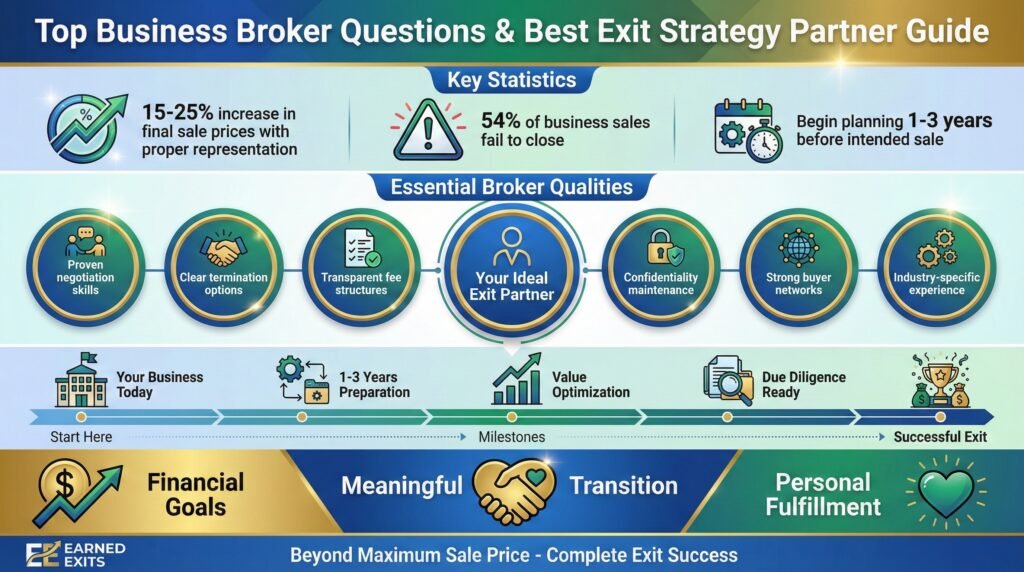
Selecting the right business broker is crucial to maximizing your exit value and ensuring a smooth transition, with research showing proper representation can increase final sale prices by 15-25%.
A comprehensive exit strategy should begin 1-3 years before your intended sale to optimize business value and prepare for due diligence challenges.
The top business brokers combine industry-specific experience with strong buyer networks and maintain confidentiality throughout the selling process.
Transparent fee structures, clear termination options, and proven negotiation skills are essential qualities to look for when vetting potential exit partners.
Earned Exits specializes in creating meaningful business transitions that align with owners’ personal and financial goals beyond just maximizing sale price.
Selling your business represents the culmination of years, sometimes decades, of hard work and sacrifice. Yet many owners underestimate how significantly their choice of business broker impacts not just their final sale price, but the entire exit experience. The right partner doesn’t merely list your business; they orchestrate a comprehensive strategy that preserves your legacy while maximizing your financial return.
Your exit strategy deserves the same strategic thought and careful planning that built your business in the first place. With approximately 54% of business sales failing to close, selecting an exit partner with the right expertise, resources, and approach becomes one of the most consequential decisions of your entrepreneurial journey.
Planning your departure from a business you’ve built requires emotional intelligence alongside technical expertise. The most successful exits begin with candid conversations about your personal goals, timeline expectations, and what “success” truly means to you beyond just the dollar figure. At Earned Exits, we understand that a meaningful transition encompasses both financial outcomes and personal fulfillment.
Why Your Choice of Business Broker Makes or Breaks Your Exit
The business brokerage industry operates with remarkable variability in quality and approach. Some brokers take a volume-based approach, listing as many businesses as possible while providing minimal personalized attention. Others specialize in specific industries or transaction sizes, developing deep expertise that creates substantial value during negotiations. This distinction becomes particularly critical when facing sophisticated buyers who identify and exploit knowledge gaps.
Industry statistics reveal that professionally represented businesses typically sell for 15-25% higher multiples than those marketed directly by owners. This premium results from several factors: strategic positioning of business strengths, access to broader buyer networks, and skilled negotiation that maintains leverage throughout the process. More importantly, experienced brokers anticipate and navigate the emotional complexities that frequently derail transactions during the most delicate phases.
Beyond price, the right broker shields you from common pitfalls that jeopardize confidentiality or create unnecessary liability. They construct a comprehensive exit plan that addresses tax implications, transition details, and post-close considerations that might otherwise be overlooked. This holistic approach transforms what could be a chaotic, stressful experience into a methodical process with predictable milestones and outcomes.
10 Critical Questions to Ask Before Hiring a Business Broker (1 through 5)
The interview process with potential business brokers reveals much about their capabilities and compatibility with your needs. Don’t rush this evaluation phase; the right partner will welcome your thorough assessment and respond with transparency. These ten questions form the foundation of a comprehensive vetting process that separates exceptional exit partners from merely adequate ones.
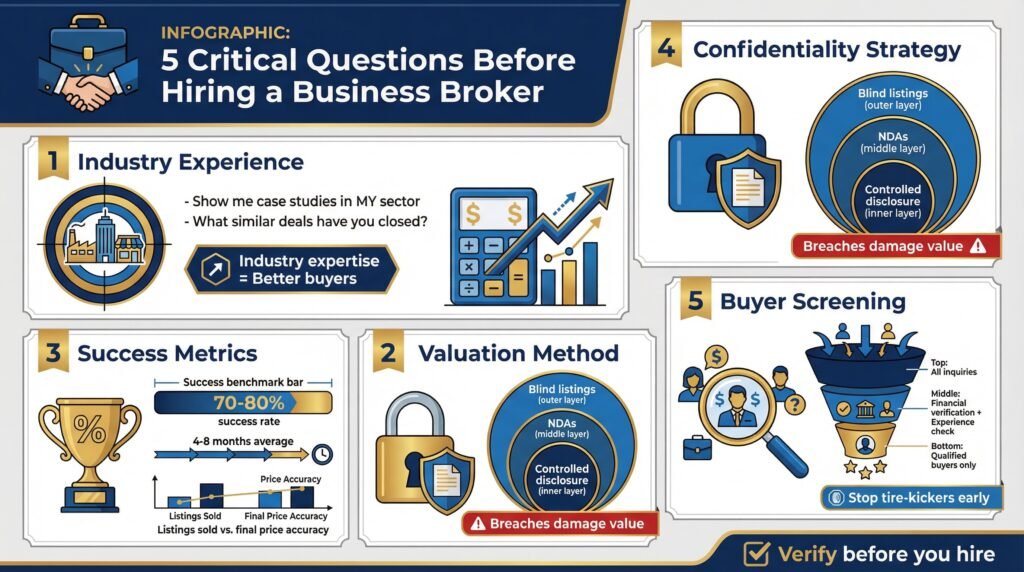
1. What specific experience do you have selling businesses in my industry?
Generic business sales experience isn’t sufficient when navigating the complexities of your specific industry. A broker with relevant sector expertise understands the unique valuation factors, potential buyer profiles, and common deal structures in your market segment. They should readily share examples of similar transactions they’ve completed, along with challenges they’ve overcome that relate to your business type. Industry specialists also maintain relationships with strategic buyers actively seeking opportunities in your sector.
Ask for specific case studies that demonstrate their familiarity with businesses like yours. The most qualified brokers can discuss industry trends, typical multiples, and how your business compares to others they’ve successfully sold. Their responses should reveal substantial knowledge about your market’s competitive landscape and buyer expectations, not just general sales expertise.
2. How do you determine my business valuation?
Valuation methodology reveals much about a broker’s sophistication and commitment to maximizing your return. Beware of simplistic approaches that merely apply standard multiples to your earnings without considering your business’s unique assets, growth trajectory, and strategic value. A thorough valuation process should combine multiple methodologies, including comparable sales analysis, discounted cash flow calculations, and asset-based evaluations where appropriate.
The most effective brokers take time to understand value drivers specific to your operation, such as proprietary technology, recurring revenue streams, or untapped market opportunities. They should articulate how these factors influence their valuation strategy and how they’ll position these strengths to potential buyers. Their explanation should demonstrate both analytical rigor and marketing insight, showing how they’ll translate your business’s financial performance into compelling value propositions.
3. What’s your success rate and average time to sell?
Success metrics tell a compelling story about a broker’s effectiveness. Quality brokers maintain detailed statistics about their performance, including the percentage of listings sold, average time to close, and how final prices compare to initial valuations. Look for a success rate of at least 70-80%, which indicates they’re selective about the businesses they represent and realistic about marketability. Average selling timeframes vary by industry and price point, but most well-priced businesses should attract qualified buyers within 4-8 months.
The most transparent brokers will segment their performance data by business size and industry, allowing you to evaluate outcomes most relevant to your situation. They should also explain market factors that affect timelines, such as economic conditions, financing availability, and seasonal considerations specific to your business type. Beware of those claiming universally quick sales with minimal effort. These promises rarely align with market realities.
4. How will you market my business while maintaining confidentiality?
Confidentiality breaches represent one of the greatest risks in the business sale process. Premature disclosure can damage customer relationships, embolden competitors, destabilize staff, and erode business value. Sophisticated brokers implement multi-layered confidentiality protocols, including blind listings, non-disclosure agreements with progressive information release, and carefully controlled buyer qualification processes. Their marketing strategy should demonstrate a thoughtful balance between generating interest and protecting sensitive information.
Request specific examples of marketing materials they’ve used for similar businesses, with sensitive details redacted. These materials should be professionally produced, strategically positioned, and designed to attract appropriate buyer interest without revealing identifying details. The broker should articulate how they qualify potential buyers before sharing confidential information and their process for tracking who receives which level of disclosure throughout the sale process.
5. What’s your buyer screening process?
Effective buyer screening saves considerable time and minimizes risk during the sale process. Your broker should have systematic procedures for evaluating financial capability, operational experience, and strategic fit before introducing potential buyers to your opportunity. This process typically includes verification of liquid assets, review of investment criteria, and assessment of relevant industry background or management experience.
Ask about their database of active buyers and how they continuously cultivate relationships with qualified prospects. Superior brokers maintain detailed profiles of serious buyers, allowing for targeted marketing of your business to those most likely to close successfully. They should explain how they distinguish between “tire-kickers” and serious buyers with both the means and motivation to complete your transaction efficiently.
Before the Questions Begin: Matching Broker Expertise to Your Business Size
Small businesses valued under $1 million typically require different marketing approaches and buyer networks than mid-market companies valued between $5-40 million. The most effective brokers specialize within specific valuation ranges rather than attempting to serve all market segments equally.
Earned Exits has developed particular expertise with businesses valued between $1-50+ million, with specific methodologies tailored to different valuation segments within this range.
Their approach recognizes that a $2 million service business requires different positioning and buyer targeting strategies than a $30 million manufacturing operation, even while applying consistent transactional excellence principles across all engagements.
Earned Exits has facilitated over 47 successful business transactions worth $2.1 Billion, demonstrating how specialized industry knowledge translates to exceptional results.
While many brokers operate as generalists, Earned Exits has developed specialized expertise across 17 distinct business sectors, including manufacturing, distribution, professional services, technology, and specialty contracting.
This preparation phase frequently generates the highest return on investment in the entire exit process, with strategic improvements often increasing final transaction values by 20-50% when implemented 12-24 months before planned exits. Start the process of your business exit today with Earned Exits free business valuation via the link below.
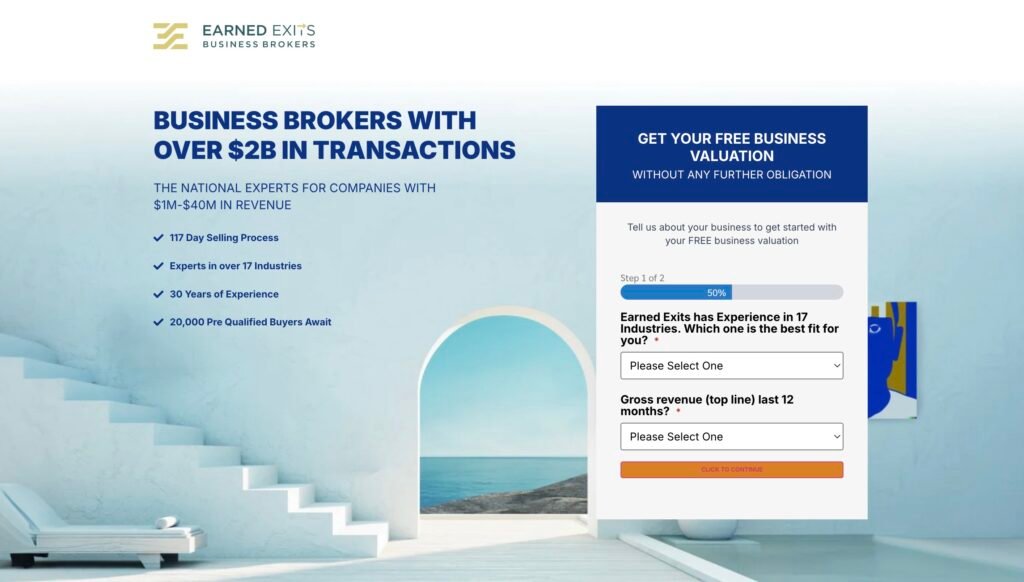
Click below to get started today with a free business valuation from Earned Exits by filling out their short form. See how their proven 10-step exit process helps owners achieve maximum value on their terms.
Frequently Asked Questions
Business owners considering exit strategies typically share common concerns about the process, costs, and best practices. These frequently asked questions address core considerations that shape successful exit planning. While general principles provide useful guidance, remember that your specific circumstances may require customized approaches.
The following responses represent consolidated wisdom from hundreds of successful transactions across diverse industries and business sizes. Consider these insights starting points for deeper conversations with your professional advisors rather than definitive prescriptions for your unique situation.
How much should I expect to pay a business broker?
Business broker fees typically range from 8-12% for small businesses (under $1 million) and scale downward to 2-6% for larger enterprises ($5+ million). Most quality brokers use tiered commission structures with higher percentages applying to initial value segments and decreasing rates for amounts above certain thresholds. Additional costs may include business valuation fees ($3,000-$10,000+ depending on complexity), marketing expenses, and potential retainers credited against success fees upon closing. The most transparent brokers provide detailed breakdowns of all potential costs before engagement, including circumstances that might trigger additional charges.
What’s the difference between a business broker and an M&A advisor?
The distinction between business brokers and M&A advisors primarily reflects transaction size, complexity, and service scope. Business brokers typically handle smaller transactions (under $5 million) with standardized processes focused on business listing, buyer identification, and basic transaction facilitation. M&A advisors generally manage larger, more complex transactions involving comprehensive financial analysis, extensive buyer research, strategic positioning, and complex deal structuring. Their approach tends to be more consultative and customized, often involving specialized industry expertise and sophisticated valuation methodologies. The boundaries between these categories have blurred considerably, with many firms now offering tiered service models that adapt to various transaction sizes and complexity levels.
Can I sell my business without using a broker?
Selling your business independently remains viable but carries significant limitations and risks. The owner-led approach works best when you’ve already identified qualified buyers, have strong advisory support from attorneys and accountants, and possess both transaction experience and substantial time availability. Direct sales typically succeed with strategic buyers already familiar with your operation or competitors seeking market expansion opportunities.
However, managing confidentiality becomes extremely challenging without professional intermediaries, often leading to damaging information leaks that affect employee stability, customer relationships, and competitive positioning. Most business owners also lack access to comprehensive buyer networks, negotiation leverage, and comparative transaction data that maximize valuation. Perhaps most significantly, direct involvement makes maintaining emotional objectivity during negotiations extraordinarily difficult, frequently resulting in suboptimal terms or collapsed deals during challenging phases.
The most balanced approach often involves evaluating whether cost savings from eliminating broker commissions outweigh the probable value enhancement and risk reduction professional representation provides. This calculation varies substantially based on your business size, complexity, market conditions, and personal circumstances.
“The greatest expense in a business sale isn’t the broker commission, it’s the value left behind through inadequate preparation, limited buyer competition, and compromised negotiating positions. Professional representation typically returns multiples of its cost through enhanced transaction terms.”
How long does it typically take to sell a business?
The business sale timeline varies considerably based on multiple factors, but comprehensive data indicates most successfully completed transactions require 7-12 months from formal market introduction to closing. This duration encompasses several distinct phases: preparation (1-3 months), marketing and buyer identification (2-4 months), negotiation and letter of intent (1-2 months), due diligence (2-3 months), and closing documentation (1 month). Industry characteristics, business size, economic conditions, and deal complexity significantly influence these timeframes.
Well-prepared businesses with clean financial records, diversified customer bases, strong management teams, and realistic valuation expectations typically experience shorter sale cycles. Conversely, businesses with significant owner dependencies, customer concentration issues, declining financial performance, or unrealistic pricing often require extended marketing periods or fail to close altogether. The most successful exits begin with realistic timeline expectations and thorough preparation focused on addressing probable buyer concerns before they emerge during due diligence.
Should I tell my employees I’m planning to sell?
Employee communication represents one of the most delicate aspects of business exits. Premature disclosure creates substantial risks, including talent departures, reduced productivity, customer relationship damage, and competitor exploitation of uncertainty. Most successful transactions maintain strict confidentiality until reaching definitive purchase agreements, with controlled disclosure occurring only during late-stage due diligence when absolutely necessary.
The optimal approach typically involves preparing comprehensive transition plans before any disclosure occurs. These plans address retention incentives for key employees, communication strategies for various stakeholder groups, and contingency arrangements for potential departures. Some transactions benefit from staged disclosure to senior leadership teams who can assist with due diligence requirements while maintaining confidentiality from broader employee groups.
Once disclosure becomes necessary, focus communications on continuity elements, growth opportunities under new ownership, and specific plans that address natural employee concerns about job security and operational changes. The most successful transitions combine transparency about relevant changes with reassurance about continued operational fundamentals that support business stability during ownership transitions.
Earned Exits specializes in managing these sensitive communication phases to protect business value while maintaining team cohesion throughout your exit process.
Ranked a top business broker in 2025, Earned Exits has facilitated over 47 successful business transactions worth $2.1 Billion, demonstrating how specialized industry knowledge translates to exceptional results. Get started today with Earned Exits free business valuation via the link below and fill out their short form:

*Disclaimer: This article is written for educational purposes and should not be interpreted as financial advice.
*Disclaimer: This article is written for educational purposes and should not be interpreted as financial advice. We may receive compensation for referrals made through this article.