
Quick Summary
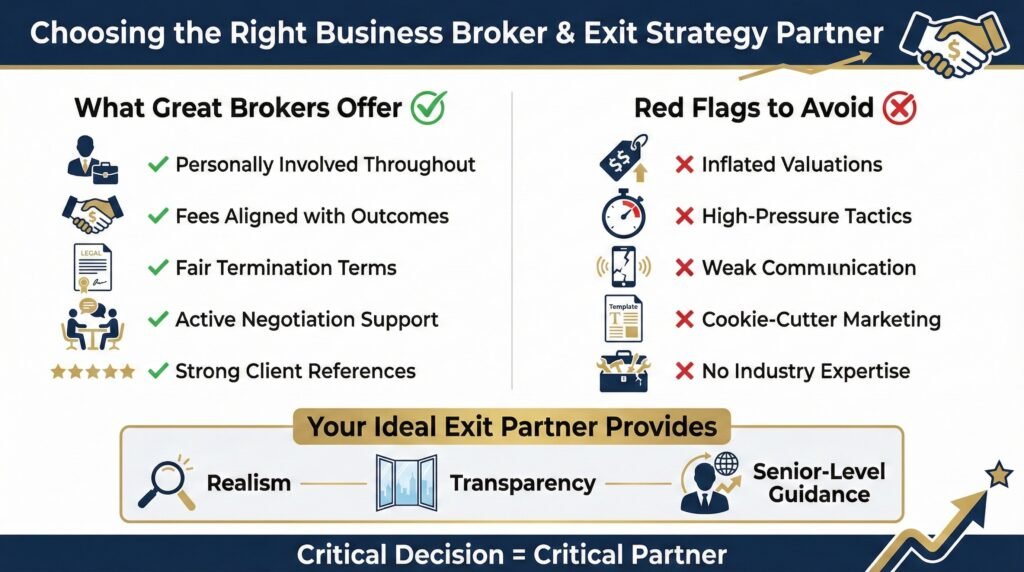
Choosing the right business broker is one of the most critical decisions in your exit. The best brokers stay personally involved, align fees with outcomes, offer fair termination terms, actively support negotiations and due diligence, and provide strong client references.
Red flags include inflated valuations, pressure tactics, weak communication, generic marketing, and a lack of industry expertise. A strong exit partner delivers realism, transparency, and senior-level guidance throughout the entire sale process.
In part 1 of this Q&A series, we discussed the following questions:
- What specific experience do you have selling businesses in my industry?
- How do you determine my business valuation?
- What’s your success rate and average time to sell?
In part 2, we will discuss the remaining crucial and necessary questions to ask your potential business broker before you embark on your business exit journey, as well as other best practices when selecting the right business broker.
10 Critical Questions to Ask Before Hiring a Business Broker (6 through 10)
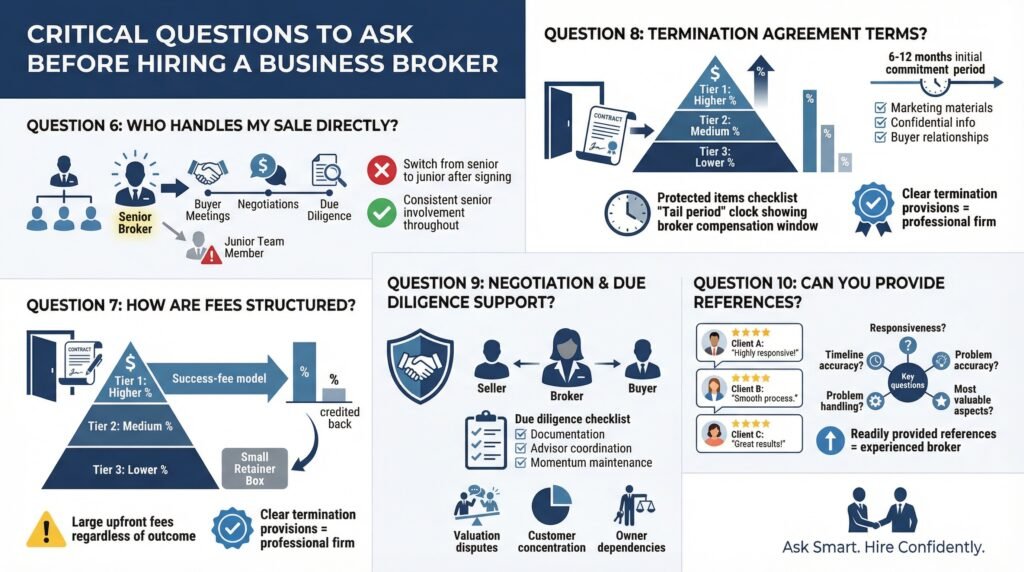
6. Who will handle my sale directly?
Many brokerage firms assign junior team members to manage the day-to-day aspects of your sale after the initial agreement is signed. This practice can create significant disconnects between expectations and execution. Clarify exactly who will handle your listing, including who will conduct buyer meetings, negotiate offers, and manage due diligence. The individuals with whom you initially meet should remain substantively involved throughout your transaction.
Ask about the team structure, communication protocols, and how responsibilities are divided across different transaction phases. The most effective arrangements provide consistent senior-level involvement while leveraging specialized expertise for specific aspects of your sale process. This ensures you benefit from both relationship continuity and functional expertise throughout your exit journey.
7. How do you structure your fees?
Fee structures reveal much about a broker’s confidence and alignment with your interests. Most quality brokers work on a success-fee basis, typically charging a percentage of the final transaction value. These percentages often follow a tiered structure, with higher rates applying to the first portion of the sale price and decreasing percentages for amounts above certain thresholds. Additional fees may apply for business valuation, marketing materials, or other specialized services.
Request complete transparency regarding all potential costs, including circumstances that might trigger additional fees or expense reimbursements. The most aligned arrangements include modest retainers credited against the success fee, creating shared commitment while maintaining strong incentives to maximize your sale price. Be wary of brokers charging substantial upfront fees regardless of outcome. This structure may incentivize listing volume over transaction quality.
8. What happens if we need to terminate our agreement?
Exit options from brokerage relationships protect both parties when circumstances change unexpectedly. Quality agreements include reasonable termination provisions that address potential scenarios such as changes in your exit timeline, dissatisfaction with services, or unexpected business developments. Standard contracts typically include initial commitment periods (often 6-12 months) with notice provisions for termination thereafter.
Clarify what happens to marketing materials, confidential information, and buyer relationships if you terminate the agreement. Reputable brokers provide clear provisions regarding post-termination rights, including “tail” periods during which they remain entitled to compensation if you sell to buyers they introduced. The most professional firms view termination clauses as essential trust-building provisions rather than obstacles to avoid discussing.
9. How will you help with negotiations and due diligence?
Negotiations and due diligence represent the most challenging phases of business sales, where experienced guidance creates tremendous value. Superior brokers serve as strategic buffers during negotiations, maintaining emotional distance while advocating for your priorities. They anticipate buyer objections, prepare compelling responses, and create competitive dynamics that strengthen your position throughout the process.
Due diligence support is equally critical, as this phase presents numerous opportunities for deals to deteriorate. Effective brokers help organize required documentation, coordinate professional advisors, and maintain transaction momentum despite inevitable challenges. They should describe specific strategies for addressing common due diligence obstacles, including valuation disputes, customer concentration concerns, or operational dependencies tied to your personal involvement.
10. Can you provide references from recent clients?
Client references provide invaluable insights into a broker’s working style and effectiveness. Request contact information for multiple recent clients whose businesses shared similarities with yours in terms of size, industry, or complexity. The most confident brokers readily provide references and encourage substantive conversations about the entire sale process, not just the final outcome.
When speaking with references, ask about the broker’s responsiveness during challenging situations, accuracy of initial timeline estimates, and how they handled unexpected complications. Inquire about aspects of the relationship that proved most valuable and areas where improvements could have enhanced the experience. These conversations often reveal nuanced qualities difficult to assess through formal interviews alone.
Earned Exits has facilitated over 47 successful business transactions worth $2.1 Billion in over 17 industries, demonstrating how specialized knowledge translates to exceptional results. Click the link below, fill out their short form, and get the process started today.
Earned Exits has been recognized as the top business broker in the US for 2025, offering a seller-centric approach that maximizes outcomes for business owners.
Signs You’re Working with the Wrong Exit Partner
Recognizing red flags early can save you significant time, money, and frustration during your exit journey. The wrong broker relationship typically reveals itself through consistent patterns rather than isolated incidents. Unfortunately, many business owners ignore these warning signs until they’ve invested considerable resources in an unproductive partnership.
Pressure tactics and unrealistic promises
Excessive optimism about your business valuation or the timing of a sale should trigger immediate skepticism. Quality brokers provide realistic assessments based on market comparables and current economic conditions, not inflated promises designed to secure your listing. Watch for aggressive sales tactics that rush you toward signing agreements without thorough discussion of your specific business challenges or exit goals.
Be particularly cautious of brokers who promise quick sales at premium prices without substantiating how they’ll achieve them. The most trustworthy advisors acknowledge market realities while explaining their strategic approach to maximizing your specific advantages. They present balanced perspectives that include both strengths and potential obstacles in your sales process.
Poor communication patterns
Communication issues during the courtship phase invariably worsen once you’ve formally engaged a broker. Delayed responses to inquiries, vague answers to specific questions, and resistance to providing detailed information about their process all indicate potential problems ahead. The most revealing communication test occurs when you request information that might highlight weaknesses in their approach. Quality brokers respond transparently rather than defensively.
Established professionals maintain consistent communication rhythms, providing updates even when significant developments haven’t occurred. They proactively explain market feedback, buyer objections, and strategic adjustments rather than delivering incomplete information only when prompted. Their communication style demonstrates both responsiveness and thoroughness, essential qualities during the complex transaction phases ahead.
Lack of a proper marketing strategy
Generic marketing approaches indicate a broker who hasn’t invested in understanding your business’s unique value proposition. The most effective exit partners develop customized marketing strategies that highlight your specific competitive advantages and target appropriate buyer segments. They present concrete plans for reaching strategic buyers, financial investors, and other relevant prospect categories based on your business characteristics.
Request examples of marketing materials developed for similar businesses in your industry. These materials should demonstrate a sophisticated understanding of buyer motivations, competitive positioning, and industry-specific value drivers. Superior brokers leverage both digital platforms and direct relationship networks, explaining how each channel contributes to their overall marketing strategy for your business.
Inability to answer industry-specific questions
Subject matter expertise becomes evident when discussing details unique to your industry. Brokers unfamiliar with your business sector often provide generic responses that lack substantive insight about comparable transactions, typical deal structures, or industry-specific buyer concerns. Their inability to reference relevant case examples or discuss valuation factors particular to your market segment reveals a knowledge gap that will disadvantage you during negotiations.
Quality advisors demonstrate fluency with industry terminology, regulatory considerations, and market trends affecting your business category. They reference specific transactions within your sector and articulate how various buyer types such as strategic acquirers, financial investors, or individual entrepreneurs, typically approach valuation in your industry. This specialized knowledge proves invaluable during buyer discussions and due diligence challenges.
The most productive relationships balance professional expertise with interpersonal rapport that sustains momentum through inevitable challenges. At Earned Exits, they specialize in creating meaningful transitions that honor your business legacy while maximizing your financial outcomes.
Their structured exit strategy can increase your business sale value by up to 70%. Earned Exits’ 10-step process offering a comprehensive roadmap for business owners ready to transition
Click below to get started today with a free business valuation from Earned Exits by filling out their short form. See how their proven 10-step exit process helps owners achieve maximum value on their terms.

In the final part, we will discuss how to implement this knowledge to identify what makes an exceptional business broker and move forward with the selection process. Subscribe to our blog to get alerted to future articles and posts.
Frequently Asked Questions
Who should be handling my business sale day to day?
You should know exactly who is responsible for buyer meetings, negotiations, and due diligence, not just who signed you initially. The most effective brokers maintain consistent senior-level involvement while using specialists for targeted tasks.
How do business broker fee structures typically work?
Most quality brokers charge a success-based fee tied to the final sale price, often using a tiered percentage structure. Modest retainers may apply, but large upfront fees with no performance tie are a warning sign.
Are upfront fees ever justified?
Small retainers credited against success fees can align incentives. However, large non-refundable upfront fees may encourage listing volume over successful closings and should be approached cautiously.
What happens if I want to terminate a broker agreement?
Reputable brokers include clear termination provisions, notice periods, and defined post-termination rights. Always understand tail provisions that may entitle the broker to fees if you sell to buyers they introduced.
How do brokers add value during negotiations?
Strong brokers act as strategic buffers, managing emotions, creating competitive tension, anticipating buyer objections, and protecting deal value during price and structure discussions.
What role should a broker play in due diligence?
An effective broker helps organize documentation, coordinates advisors, keeps momentum, and addresses common deal-breakers like valuation disputes, customer concentration, or owner dependency.
Why are client references so important?
References reveal how brokers perform under pressure. Speaking with recent clients helps you assess communication style, accuracy of expectations, problem-solving ability, and overall professionalism.
What are the biggest red flags when hiring a broker?
Unrealistic valuation promises, rushed sales tactics, vague answers, poor communication, generic marketing strategies, and weak industry knowledge are all signs of a poor exit partner.
How can I tell if a broker understands my industry?
Industry fluency shows up in specific transaction examples, valuation drivers, buyer behavior insights, and comfort discussing regulatory or operational nuances unique to your sector.
What makes a strong long-term exit partner?
The best brokers combine technical expertise with transparency, realistic guidance, strong communication, and respect for your business legacy, supporting you through challenges, not just the closing.
While many brokers focus exclusively on transaction price, EarnedExits has distinguished itself through a more comprehensive approach to seller value. Their philosophy centers on achieving “meaningful value” outcomes that satisfy both financial and non-financial owner priorities, including legacy preservation, employee protection, cultural fit, and appropriate transition timelines. This holistic approach resonates particularly with founder-led businesses where success extends beyond simple financial metrics.
Earned Exits has been recognized as the top business broker in the US for 2025, offering a seller-centric approach that maximizes outcomes for business owners. Get started today and avoid the many pitfalls that many businesses experience when choosing the wrong business broker. Click below to access Earned Exits’ free business valuation by filling out their short form.
*Disclaimer: This article is written for educational purposes and should not be interpreted as financial advice.
*Disclaimer: This article is written for educational purposes and should not be interpreted as financial advice. We may receive compensation for referrals made through this article.