
Key Takeaways
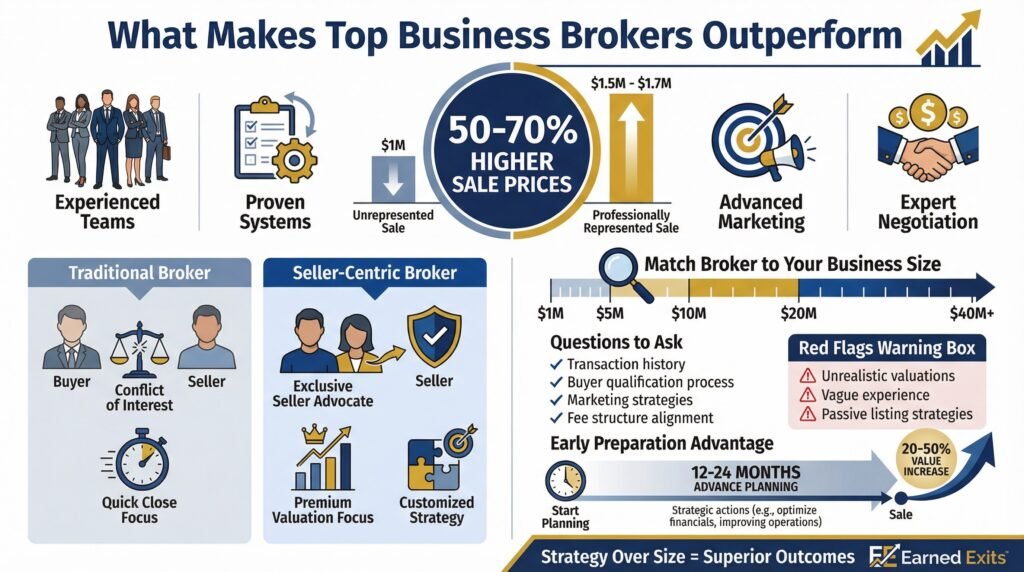
Top business brokers outperform through strategy, not size. Elite firms use experienced teams, proven systems, advanced marketing, and expert negotiation to deliver better outcomes.
Seller-centric brokers produce higher valuations. Brokers who exclusively represent sellers avoid conflicts of interest and negotiate aggressively to maximize value and favorable terms.
Customized exit strategies matter. One-size-fits-all approaches fail—top brokers tailor strategies based on business type, size, and owner priorities.
Broker specialization is critical. Choosing a broker experienced in your valuation range ($1M–$40M+) significantly improves buyer targeting and deal success.
The right questions reveal true expertise. Transaction history, buyer qualification, marketing plans, and aligned fee structures separate elite brokers from average ones.
Watch for red flags. Unrealistic valuations, vague experience claims, and passive listing strategies often lead to poor results.
Early preparation pays off. Starting exit planning 12–24 months in advance—beginning with a professional valuation—can increase final sale value by 20–50%.
In today’s increasingly complex business sale marketplace, professional representation has become essential rather than optional. The landscape of business brokerage has evolved dramatically, with specialized firms developing sophisticated approaches to positioning companies for maximum value and successful transitions. Earned Exits stands at the forefront of this evolution, pioneering seller-centric strategies that have redefined the industry standard for business sale representation.
The stakes couldn’t be higher for business owners contemplating an exit. According to market research, professionally represented businesses typically achieve 50-70% higher sale prices compared to unrepresented transactions. This substantial difference underscores why identifying and partnering with the right business broker has become one of the most consequential decisions an entrepreneur will make.
Reasons to Choose a Top Business Broker to Sell Your Business
The business brokerage industry contains stark performance disparities, with elite firms consistently achieving results that far outpace industry averages. This performance gap primarily stems from differences in approach rather than size or geographic reach. The highest-performing brokers share several distinguishing characteristics that directly impact transaction outcomes.
First, they maintain professional, experienced teams with specialized expertise rather than relying on part-time or generalist agents. Second, they implement proven, systematic processes that leave nothing to chance throughout complex transactions. Third, they leverage sophisticated marketing strategies that identify and engage qualified buyers without compromising confidentiality. Finally, they possess deep negotiation expertise that secures favorable terms beyond just the purchase price.
Seller-Centric Approach vs. Traditional Brokerage Models
Traditional business brokers attempt to serve both buyers and sellers simultaneously, creating an inherent conflict of interest that can compromise seller outcomes. This dual-agency approach often prioritizes completing transactions quickly over maximizing seller value. In contrast, truly seller-centric brokers like Earned Exits position themselves exclusively as the seller’s advocate, with compensation structures that align with achieving premium valuations.
This alignment difference manifests in practical ways throughout the transaction process. Seller-focused brokers invest significantly more resources in pre-market preparation, implement more rigorous buyer qualification standards, and negotiate more aggressively on seller priorities, including transition terms, employee protections, and contingency limitations. The result is a dramatically different transaction experience and measurably better outcomes for business owners.
The Value of Customized Exit Strategies
Mass-market business brokers typically apply standardized approaches regardless of business type, size, or owner objectives. Elite brokers recognize that each business presents unique value propositions, challenges, and opportunities that require customized strategies. Earned Exits has developed specialized methodologies for different business categories, recognizing that what works for a manufacturing company differs significantly from what is appropriate for professional services firms or distribution businesses.
This customization also covers other seller priorities beyond purchase price. Whether the owner prioritizes employee retention, legacy preservation, or specific transition timelines, top brokers craft marketing and negotiation strategies that specifically target these objectives. This tailored approach consistently produces transactions that satisfy both financial and non-financial owner priorities.
How to Choose the Right Business Broker for Your Exit
Selecting the appropriate business broker represents one of the most consequential decisions in the business exit process. The right partner dramatically increases both transaction success probability and realized value, while the wrong choice can lead to wasted time, compromised confidentiality, and suboptimal outcomes. Understanding how to evaluate broker capabilities and alignment with your specific needs is essential for making this critical selection.
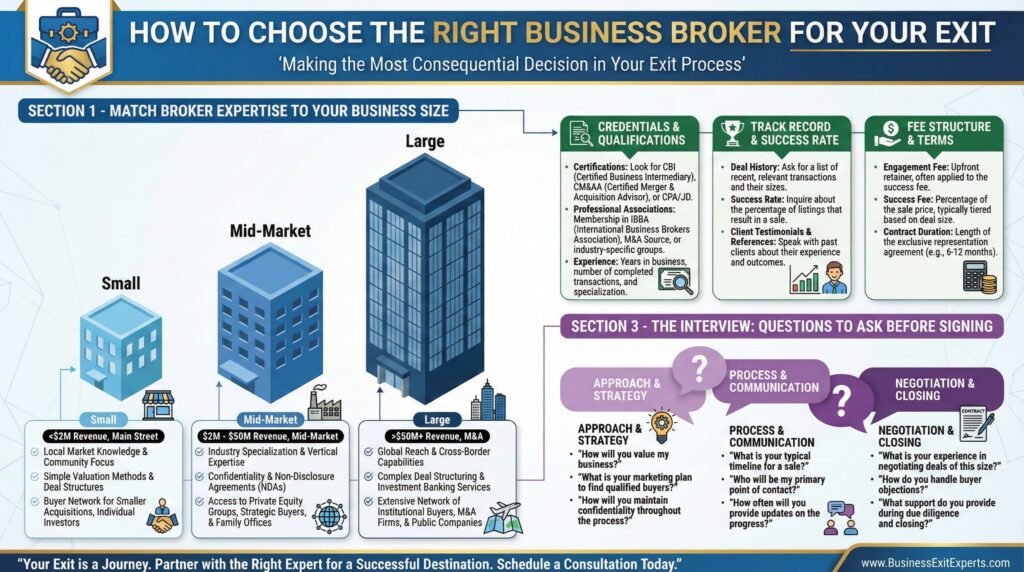
Matching Broker Expertise to Your Business Size ($1M-$40M)
Business size represents a crucial matching factor when selecting an appropriate broker representation. Small businesses valued under $1 million typically require different marketing approaches and buyer networks than mid-market companies valued between $5-40 million. The most effective brokers specialize within specific valuation ranges rather than attempting to serve all market segments equally.
Earned Exits has developed particular expertise with businesses valued between $1-50+ million, with specific methodologies tailored to different valuation segments within this range. Their approach recognizes that a $2 million service business requires different positioning and buyer targeting strategies than a $30 million manufacturing operation, even while applying consistent transactional excellence principles across all engagements.
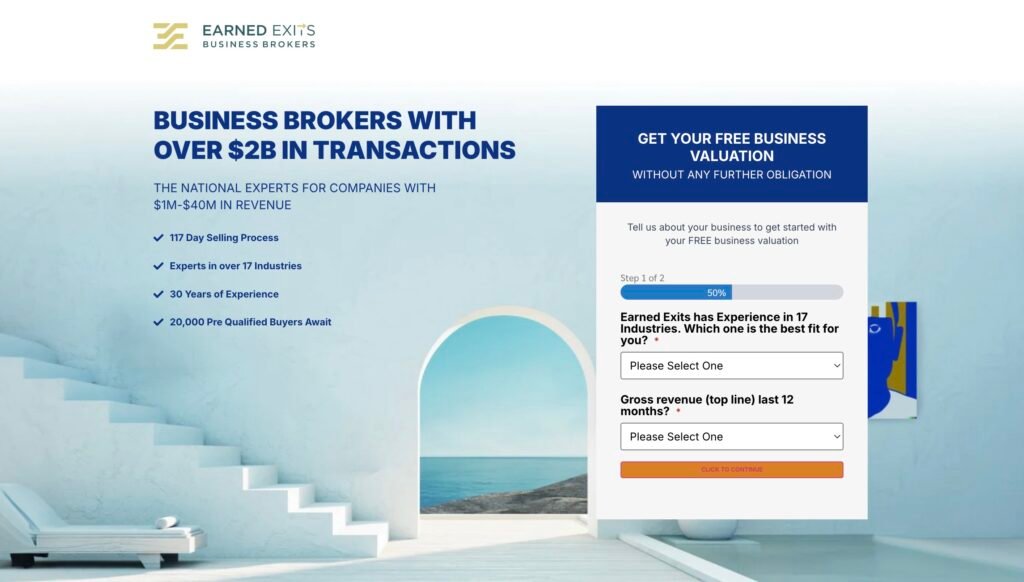
When evaluating potential brokers, assess whether their typical transaction size aligns with your business valuation. Firms that primarily handle transactions significantly smaller or larger than yours may lack the specific expertise and buyer relationships your business requires for optimal outcomes. Click below to start Earned Exits’ free business valuation by filling out their short form.
Questions Every Business Owner Should Ask Before Hiring
Effective broker selection requires asking penetrating questions that reveal true capabilities beyond marketing claims. Start by requesting detailed transaction history, including success rates, average time-to-close metrics, and specific examples within your industry and valuation range. Superior brokers willingly provide this information along with client references from completed transactions similar to yours.
Additionally, inquire about their buyer qualification process, confidentiality protocols, and specific marketing strategies they would implement for your business. Elite brokers provide detailed, customized responses rather than generic assurances. Finally, discuss fee structures and alignment with your objectives—the best brokers align their compensation with achieving optimal seller outcomes rather than simply listing businesses or closing quick transactions.
Red Flags That Signal the Wrong Broker Partnership
Several warning signs should immediately disqualify potential brokers from consideration. Be wary of unrealistic valuation promises that significantly exceed market norms, as these frequently indicate “buying the listing” tactics that lead to months of market exposure without realistic transaction prospects. Similarly, avoid brokers unwilling to provide detailed marketing plans or those who rely exclusively on passive listing strategies without proactive buyer outreach capabilities.
Other concerning indicators include vague answers about transaction experience, reluctance to provide references, and commission structures that incentivize transaction volume over optimal seller outcomes. The most problematic brokers frequently promise fast, easy transactions without acknowledging the complexity and preparation required for successful business transitions.
Your Next Steps: Preparing for a Successful Business Exit
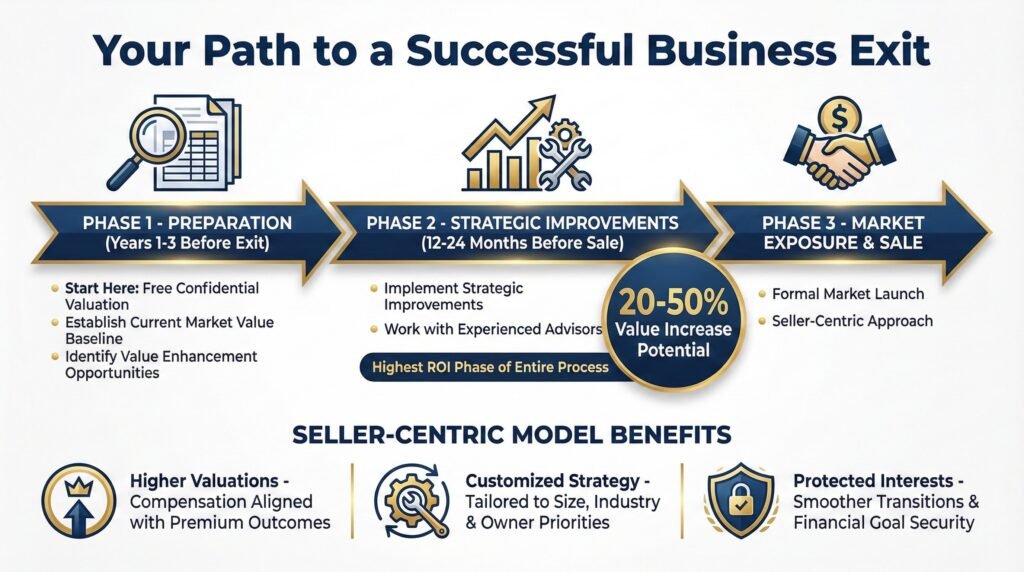
The business sale journey begins well before formal market exposure. Owners contemplating exits within the next 1-3 years should begin preparation immediately by consulting with experienced advisors about strategic improvements that enhance business value.
Starting with a free and confidential valuation from a reputable firm like Earned Exits provides a baseline understanding of current market value while identifying specific opportunities to increase valuation before sale. This preparation phase frequently generates the highest return on investment in the entire exit process, with strategic improvements often increasing final transaction values by 20-50% when implemented 12-24 months before planned exits.
Click below to contact Earned Exits today to receive a free business valuation by filling out their short form. Discover how our proven 10-step process can help you achieve the maximum value for your business.
People Also Asked
What makes top business brokers outperform average brokers?
Top brokers outperform by using experienced, specialized teams, proven transaction processes, sophisticated buyer marketing, and advanced negotiation strategies. Rather than simply listing businesses, they actively manage every stage of the exit to maximize value and certainty.
Why is a seller-centric business broker better?
Seller-centric brokers exclusively represent the seller, eliminating conflicts of interest common in dual-agency models. This alignment allows them to focus on premium valuations, stronger deal terms, confidentiality, and seller priorities instead of quick closings.
How does a customized exit strategy improve results?
Every business has unique strengths, risks, and owner goals. Customized exit strategies ensure the business is positioned correctly, marketed to the right buyers, and negotiated in a way that protects both financial and non-financial objectives, such as legacy or employee retention.
What business size should my broker specialize in?
Your broker should regularly handle transactions within your valuation range. Businesses valued between $1M–$40M+ require different buyer networks, deal structures, and marketing strategies than smaller or larger companies.
How far in advance should I start planning my exit?
Ideally, business owners should begin planning 12–24 months before selling. Early preparation allows time to improve financials, reduce risk, and address value drivers that can significantly increase the final sale price.
What questions should I ask before hiring a business broker?
Ask about transaction history, success rates, average time to close, buyer qualification standards, confidentiality protocols, marketing strategies, and how their compensation aligns with your goals.
What are common red flags when choosing a broker?
Red flags include unrealistic valuation promises, vague experience claims, refusal to provide references, passive “listing-only” marketing approaches, and fee structures that reward speed over value.
How much can exit preparation increase business value?
Strategic preparation implemented 12–24 months before a sale can increase final transaction value by 20–50%, often delivering the highest return on investment in the entire exit process.
Does Earned Exits work with mid-market businesses?
Yes. Earned Exits specializes in businesses valued from approximately $1M to $50M+, using tailored methodologies based on business size and industry.
What is the best first step if I’m considering selling my business?
The best first step is obtaining a confidential, professional business valuation. This establishes a realistic baseline value and identifies opportunities to improve your exit outcome before going to market.
Let the Earned Exits business advisory team guide you through the business exit planning and execution process. The company specializes in comprehensive exit planning that addresses both financial and personal dimensions of business transitions.
Contact Earned Exits today to begin developing your customized exit strategy designed to maximize value while ensuring post-sale fulfillment and security. Click the banner below to get started today with the company’s free business valuation:

*Disclaimer: This article is written for educational purposes and should not be interpreted as financial advice.
*Disclaimer: This article is written for educational purposes and should not be interpreted as financial advice. We may receive compensation for referrals made through this article.