
Key Takeaways
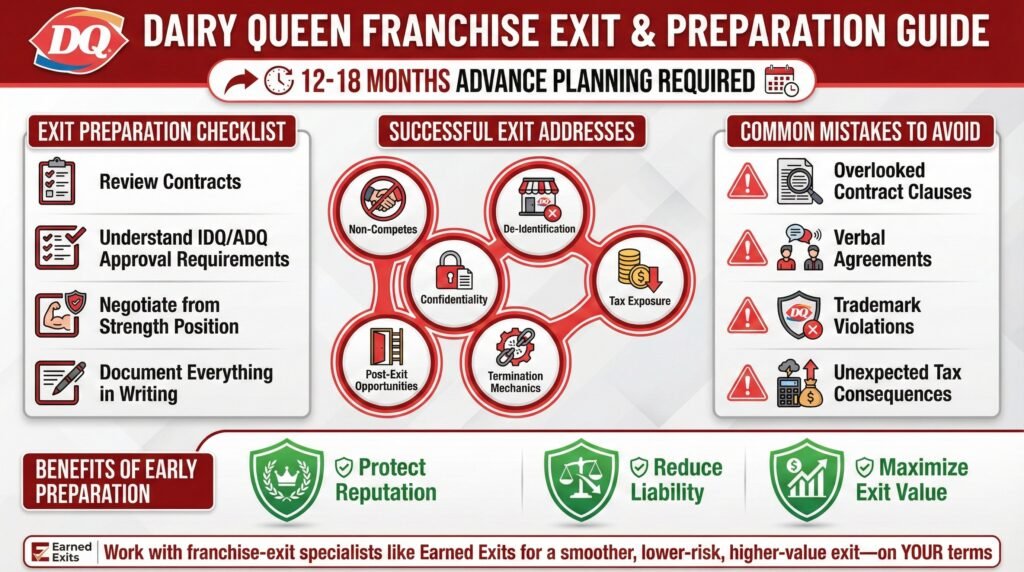
Exiting a Dairy Queen franchise is a complex legal, financial, and operational process that requires advance planning. Franchisees should begin preparing 12–18 months in advance by reviewing all franchise documents, assessing financial and tax implications, building a detailed exit timeline, and assembling an experienced advisory team.
Proper preparation helps avoid costly penalties, missed notice requirements, trademark violations, and long-term liabilities tied to non-competes, confidentiality clauses, and personal guarantees.
The most successful exits focus on more than simply terminating the agreement—they protect reputation, employees, and future opportunities while maximizing financial outcomes. Common pitfalls include overlooked contract clauses, improper de-identification, undocumented verbal agreements, confidentiality breaches, and unexpected tax consequences. Working with specialists like Earned Exits, who understand International Dairy Queen (IDQ/ADQ) approval processes and buyer expectations, can significantly reduce risk and deliver a smoother, higher-value franchise exit.
In part 2, we discussed a sample Dairy Queen Exit Template, negotiation strategies, legal pitfalls, and more. In this final part, we cover the various legal pitfalls to avoid, negotiation strategies for better terms, and more.
Negotiation Strategies for Better Exit Terms
Successful negotiation of favorable exit terms requires a strategic approach that balances assertiveness with relationship management. The nature of franchise agreements typically gives the franchisor significant leverage, but experienced franchisees know that IDQ values amicable resolutions that protect brand integrity without generating negative publicity or costly litigation.
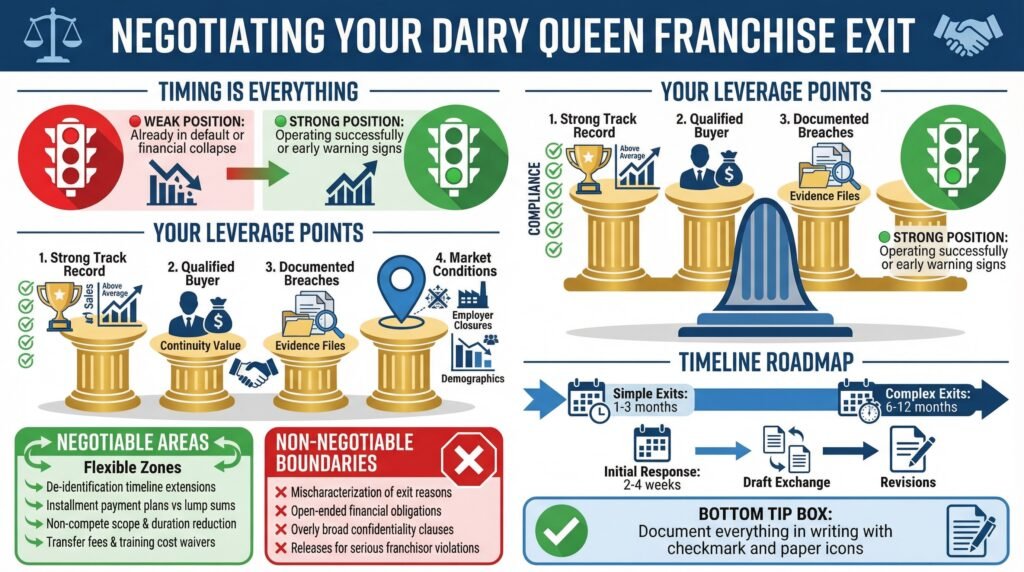
Your negotiation position is strongest when you’ve consistently met performance standards, maintained good communication with the franchisor, and can point to objective factors beyond your control that necessitate the exit. The timing of your negotiation initiation significantly impacts outcomes. Approaching IDQ when you’re already in default or facing imminent financial collapse weakens your position considerably. Instead, begin discussions while you’re still operating successfully or at the first signs of serious challenges, when you still have multiple options available. This demonstrates good faith and professional management rather than desperation, qualities that franchisors respond to more favorably
Leverage Points You Can Use
Several factors can strengthen your negotiation position when exiting a Dairy Queen franchise. Your operational track record represents perhaps your strongest leverage – franchisees with histories of compliance, above-average sales, and positive relationships with corporate representatives typically receive more favorable consideration.
Evidence of franchisor breaches or failures to provide promised support can create leverage, particularly if well-documented and potentially embarrassing to corporate leadership. Regional market conditions beyond your control, such as major employer closures or demographic shifts, often persuade franchisors to show greater flexibility, as they recognize these factors would likely impact any operator in your location.
Common Areas for Compromise
Several aspects of the exit agreement typically offer room for negotiation. The timeline for completing de-identification requirements can often be extended, particularly if you’re transitioning to a non-competing business that doesn’t create brand confusion.
Financial settlements frequently present opportunities for installment payment arrangements rather than lump sums, especially when demonstrable hardship exists. The geographical scope and duration of non-compete provisions sometimes can be narrowed, particularly if you’re leaving the system on good terms.
Transfer fees and training costs for new operators may be reduced or eliminated when you identify a qualified successor. Look for provisions that represent significant hardship without providing meaningful protection for the franchisor’s legitimate interests – these represent prime negotiation targets.
When to Stand Firm
While compromise forms an essential part of negotiation, certain boundaries warrant firm positions. Never accept provisions that mischaracterize your exit reasons in ways that could damage your professional reputation or future business opportunities.
Resist open-ended financial obligations that extend indefinitely after termination, such as percentage-based payments without clear end dates. Challenge overly broad confidentiality provisions that might prevent you from sharing legitimate experiences with potential franchisees or regulatory authorities. Most importantly, don’t sign releases for serious franchisor violations that might warrant legal action, particularly if they caused substantial financial harm to your business.
Negotiation Timeline Expectations
The timeline for negotiating Dairy Queen exit terms varies significantly based on circumstances, but typically ranges from 1-3 months for amicable, straightforward exits to 6-12 months for complex or contentious situations.
Initial response from IDQ to termination requests usually comes within 2-4 weeks, followed by draft agreement exchange and revision cycles. The most productive negotiations maintain steady momentum through regular communication while avoiding arbitrary deadlines that force hasty decisions.
Document each stage of negotiations in writing, including summaries of verbal discussions, to prevent misunderstandings and establish a clear record of agreements reached.
Legal Pitfalls to Avoid During Dairy Queen Franchise Exit
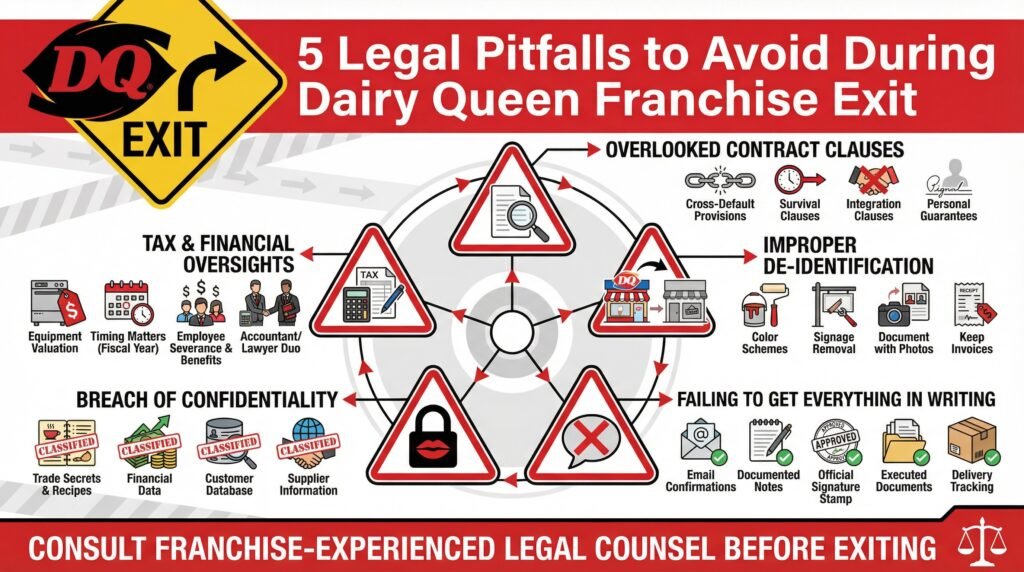
Even experienced business owners frequently encounter legal complications during franchise exits. The specialized nature of franchise law, combined with the complex and often one-sided language in franchise agreements, creates numerous potential pitfalls that can result in unexpected liability, costly litigation, or restrictions on your future business activities.
The consequences of missteps during the exit process extend far beyond immediate financial penalties. Improper termination procedures can trigger breach of contract claims, trademark infringement allegations, and damage to your business reputation that follows you into future ventures. Understanding these common pitfalls before you begin the exit process allows you to implement preventative strategies rather than attempting damage control after problems emerge.
Improper De-Identification
Incomplete or delayed de-identification represents one of the most common and costly mistakes in franchise exits. IDQ vigorously protects its trademarks and trade dress, employing mystery shoppers and field representatives to monitor compliance with de-identification requirements after termination.
Overlooking subtle brand elements like distinctive color schemes, menu terminology, or operational methods can trigger trademark infringement claims with potential damages far exceeding the cost of proper de-identification.
Document your compliance thoroughly with dated photographs, contractor invoices, and written inventories of removed items to establish clear evidence of good-faith compliance with all requirements.
Failing to Get Everything in Writing
Verbal agreements and informal understandings frequently lead to disputes during franchise exits. What seems like flexibility offered by a sympathetic franchise representative often contradicts written policy, leaving you vulnerable when that representative changes roles or corporate priorities shift.
Every modification to standard termination procedures, payment arrangements, or timeline extensions must be documented in writing and properly executed as amendments to your exit agreement. This documentation protects both parties by establishing clear expectations and preventing selective memory about what was agreed upon during emotional or complex negotiations.
When multiple franchisee entities or individuals are involved, ensure that all relevant parties are included in written agreements. Spouses who signed personal guarantees, silent partners, and related business entities must all be addressed appropriately to prevent lingering liability after what you believed was a complete termination.
- Request email confirmation of all verbal discussions with franchise representatives
- Keep dated notes of all phone conversations regarding your exit
- Ensure all agreement modifications are signed by authorized corporate officers
- Maintain copies of all communications in chronological order
- Confirm receipt of all important documents with delivery tracking
These documentation practices not only prevent misunderstandings but also strengthen your position if disputes arise later. Courts and arbitrators give significantly more weight to contemporaneous written records than to conflicting recollections of verbal discussions that occurred months or years earlier.
Breach of Confidentiality
Most Dairy Queen franchise agreements contain strict confidentiality provisions that remain enforceable after termination. Sharing operational details, proprietary recipes, financial metrics, or even the specific terms of your exit agreement could trigger breach claims.
While it may seem harmless to discuss your franchise experience with other business owners or potential franchisees, these conversations can lead to legal complications if they reveal information IDQ considers confidential. The definition of confidential information typically extends beyond obvious trade secrets to include customer data, supplier relationships, pricing strategies, and marketing approaches that you’ve been exposed to as a franchisee.
Review confidentiality provisions carefully with legal counsel to understand exactly what information you can and cannot share after your exit.
Tax and Financial Oversights
The tax implications of franchise termination often catch exiting owners by surprise, creating unexpected financial burdens at an already challenging time. Equipment sales, territory transfers, and forgiven debt may all create taxable events with significant implications.
Inadequate planning for final inventory liquidation can result in substantial losses, while improper handling of employee terminations might trigger unemployment claims or wage disputes. Work with both franchise-experienced business brokers and accounting professionals to structure your exit in the most tax-advantageous manner possible, potentially spreading certain transactions across tax years or utilizing available deductions for business losses where applicable.
Earned Exits Business Brokers Can Smooth Exit Path
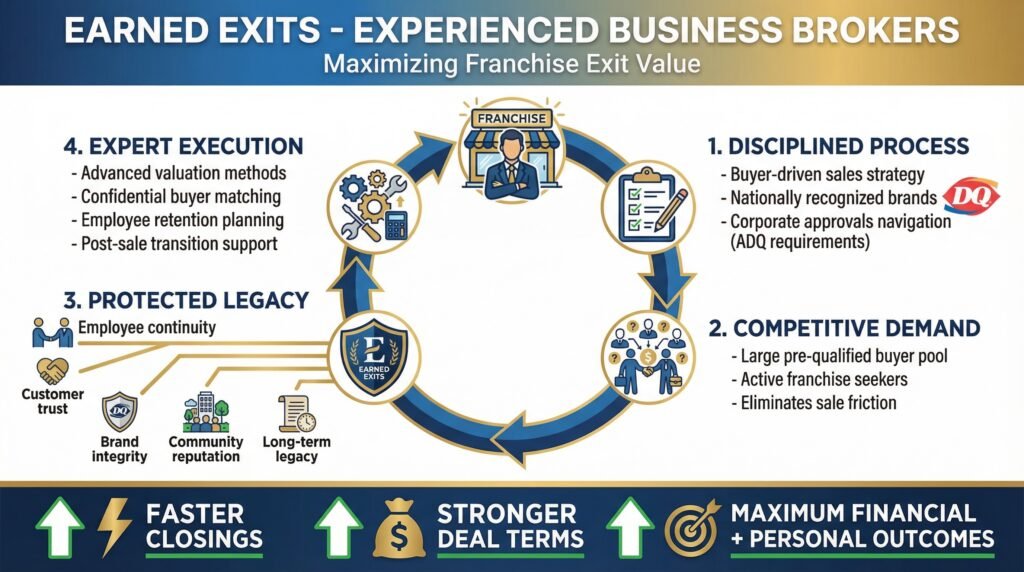
Earned Exits specializes in helping franchise owners—especially operators of nationally recognized brands like DQ—achieve premium, meaningful exits.
With a proven track record and an active pool of qualified buyers seeking established franchise locations, Earned Exits understands both buyer demand and the exact approval and transfer requirements imposed by franchise corporate offices, including ADQ. This insider knowledge allows us to run a smooth, competitive sale process that drives higher valuations while minimizing friction, delays, and risk.
But maximizing value isn’t just about price. Earned Exits focuses on what matters most to franchise owners: protecting employees, customers, vendors, and community relationships; securing the right buyer fit; preserving your reputation and legacy; optimizing tax outcomes; maintaining strict confidentiality; and structuring favorable deal terms like cash at closing and speed of exit.
Through comprehensive valuation, confidential buyer matching, employee retention planning, and post-sale transition support, Earned Exits delivers not just a sale—but a strategic, high-confidence franchise exit on your terms.
Get started today and let Earned Exits do the heavy-lifting in ensuring your smooth and profitable DQ franchise business exit. Click the link below to start their free business valuation.
Contact Earned Exits today to receive a free business valuation by clicking the button below. Fill out their short contact form to get started.

Your Path Forward After Exiting Your DQ Franchise
Successfully navigating life after your Dairy Queen franchise requires both emotional and practical adjustments. Many franchisees experience a combination of relief and uncertainty after exiting a system that provided structure, support, and identity for years. Your path forward depends largely on your exit circumstances, financial position, and personal goals.
Those leaving due to retirement might focus on wealth preservation and lifestyle considerations, while younger entrepreneurs often seek new business opportunities that leverage their operational experience without violating non-compete provisions.
The skills developed while running a successful franchise – customer service, staff management, inventory control, marketing, and financial oversight – translate well to many other business ventures, providing a foundation for your next chapter.
The proven experts and experienced professionals at Earned Exits specialize in helping Dairy Queen franchisees navigate complex exit agreements while protecting their rights and financial interests. See the link below to get started and avoid many pitfalls so you can exit your Dairy Queen Franchise smoothly.
Get started today and let the experienced team at Earned Exits perform the due diligence and heavy lifting, providing a smooth and profitable DQ franchise business exit. Click the link below to start their free business valuation. Read our full review of Earned Exits here.
If you have decided that Earned Exits is a good fit and your franchise business size is $1M-$40M+, click the link below to contact Earned Exits today to start their free business valuation by filling out a short contact form.
Business Seller Check-In
Whether you are planning to sell your business solo or utilize the experience and leveraging skills of a broker, pause and review the discussed points, and you have done the basic preparation needed to place your business on the market.
A major contributor to business undervaluations, wasted time, and poor exits is simply a lack of readiness. A broker can only sell what you’ve built.
If your business:
- Depends heavily on you
- Has inconsistent or unclear financials
- Lacks systems or transferable processes
Then even the best broker will struggle to get a premium offer. Brokers don’t create value. They expose it.
Bottom line: If you are not sure what basic preparation is required before considering a business valuation or selecting a business broker, click the link below to take our free business readiness quiz. The score will give you a clear indication of where you are in the process and the next course of action to take to ensure you start the business sale and exit on the right footing.
Frequently Asked Questions (FAQ)
How far in advance should I prepare to exit a Dairy Queen franchise?
Ideally, preparation should begin 12–18 months before your intended exit. This allows time to review contracts, assess financial impact, plan negotiations, and potentially market the business for sale instead of closing.
Do I have to sell my Dairy Queen franchise, or can I just close it?
You may either sell or terminate and close, depending on your situation and franchise agreement. Selling often preserves more value, especially if a qualified buyer is available and approved by IDQ.
What are the most common mistakes franchisees making when exiting?
The biggest pitfalls include missing notice deadlines, overlooking post-termination obligations, incomplete de-identification, relying on verbal promises, breaching confidentiality clauses, and failing to plan for taxes and final expenses.
What is de-identification, and why is it so important?
De-identification requires removing all Dairy Queen branding—signage, décor, uniforms, colors, digital assets—within a short timeframe after termination. Failure to comply can trigger trademark infringement claims and significant financial penalties.
Will I still be liable after my franchise ends?
Possibly. Personal guarantees, survival clauses, confidentiality provisions, and non-compete agreements often remain enforceable after termination. A franchise attorney should review these carefully before you exit.
How is a Dairy Queen franchise typically valued if I sell?
Most DQ locations sell based on a multiple of adjusted EBITDA—generally 3–5x for average performers and 5–7x for strong locations, depending on financials, location, and buyer demand.
Can I negotiate my Dairy Queen exit agreement?
Yes. Timelines, payment terms, non-compete scope, and certain fees are often negotiable—especially if you are in good standing or present a qualified buyer.
Why work with Earned Exits for a Dairy Queen franchise exit?
Earned Exits specializes in franchise exits and understands IDQ approval requirements, buyer expectations, and value-maximizing deal structures. The company’s process helps franchisees exit faster, with fewer risks and stronger financial outcomes.
What should I do after exiting my Dairy Queen franchise?
Post-exit paths vary. Some owners retire and focus on wealth preservation, while others pursue new ventures that leverage their franchise experience. Planning ahead ensures your next chapter starts on solid financial and legal footing.
*Disclaimer: This article is written for educational purposes and should not be interpreted as financial advice.

*Disclaimer: This article is written for educational purposes and should not be interpreted as financial advice. We may receive compensation for referrals made through this article.